Short answer
No, not if any wiring is involved. Across Australia, installing a wall charger, a new 15A outlet or a dedicated circuit is electrical wiring work that only a licensed electrician can legally do, and in NSW they must issue a CCEW. What you can do yourself is plug the car's portable cable into a sound, existing 10A power point.
Key takeaways
- Any fixed wiring for an EV charger, including a new 15A outlet or a hardwired wallbox, must be done by a licensed electrician.
- Plugging the car's portable cable into an existing, good-condition 10A power point is the one setup you can legally do yourself.
- DIY wiring risks fines, rejected insurance claims and a void charger warranty, and leaves you without a CCEW.
- You can still save time and money by choosing the charger, planning the location and photographing your switchboard before quoting.
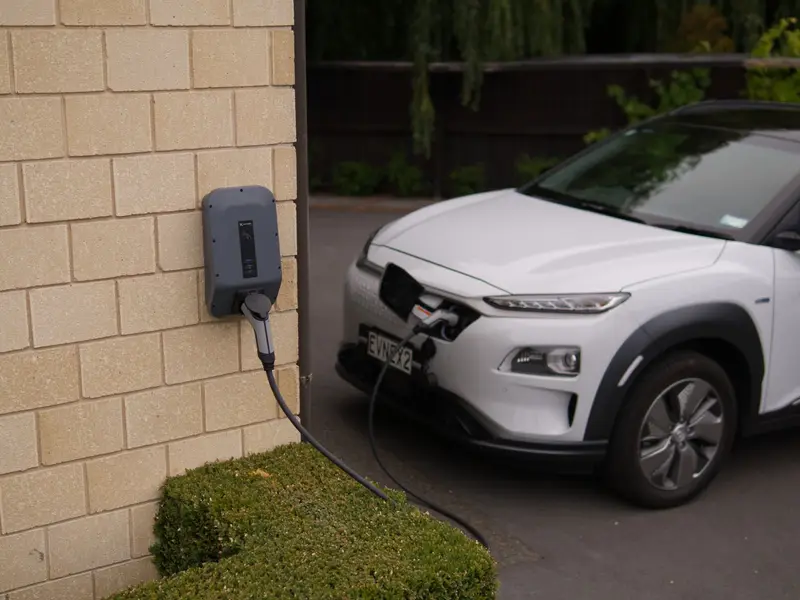
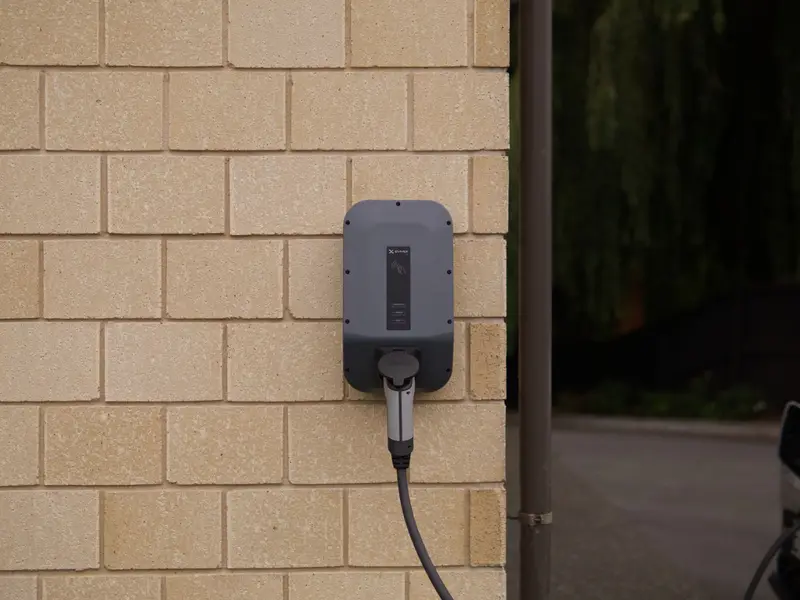
A wall charger looks like a simple box with a cable, and some are even sold online with a plug on the end. In Australia, though, the line between what you can do yourself and what the law reserves for a licensed electrician is clear, and it sits at the power point. Plugging in is yours. Anything behind the wall, and any new outlet or circuit, is not. Here is where that line falls, what happens if you cross it, and the useful jobs you can do yourself to make a professional install quicker and cheaper.
What the law says about DIY electrical work
Every Australian state and territory restricts electrical wiring work to licensed electricians. The principle is the same everywhere: if the job involves fixed wiring, meaning cables, circuit breakers, outlets or anything permanently connected to your switchboard, it must be done by someone licensed to do it.
In NSW, electrical wiring work requires a licence issued through NSW Fair Trading, and even replacing a single power point or light switch counts. Wiring a 7kW charger into your switchboard on its own circuit clearly does too. The regulator's own summary is on the NSW Fair Trading electrical work page.
What the penalties look like
Unlicensed electrical wiring work is an offence under state law, for individuals as well as businesses, and the fine is often the smaller problem. You can be required to have the work inspected and redone by a licensed electrician at your own cost, and if the installation causes a fire or injures someone, you may be held responsible for the damage.
What counts as electrical wiring work
The easiest way to see the line is task by task. The only jobs in the "yes" column involve plugging in or using an app.
| Task | Can you do it yourself? | Who does it |
|---|---|---|
| Plugging the car's portable cable into an existing 10A power point | Yes | You |
| Installing a new 10A or 15A power point for charging | No | Licensed electrician |
| Fitting a plug-in charger that needs a 15A outlet | Plugging in, yes. Installing the 15A outlet, no | Licensed electrician installs the outlet and circuit |
| Mounting and wiring a hardwired wallbox | No | Licensed electrician |
| Adding a circuit breaker or RCBO to the switchboard | No | Licensed electrician |
| Running cable to a garage, carport or detached building | No | Licensed electrician |
| Switchboard upgrades, service mains or metering | No | Licensed specialists, often a Level 2 ASP |
| Setting up the charger app and charging schedules | Yes | You, after the charger is installed and commissioned |
Why a plug-in wallbox still needs an electrician
Some chargers are sold with a plug on the end and marketed as a no-electrician option. Most of them need a 15A outlet. A 15A plug has a wider earth pin than a standard 10A plug, so it will not fit a normal power point, and that 15A outlet must be installed by a licensed electrician, on its own dedicated circuit. Adaptors that force a 15A plug into a 10A socket overload a circuit that was never designed for the job. Never use one.
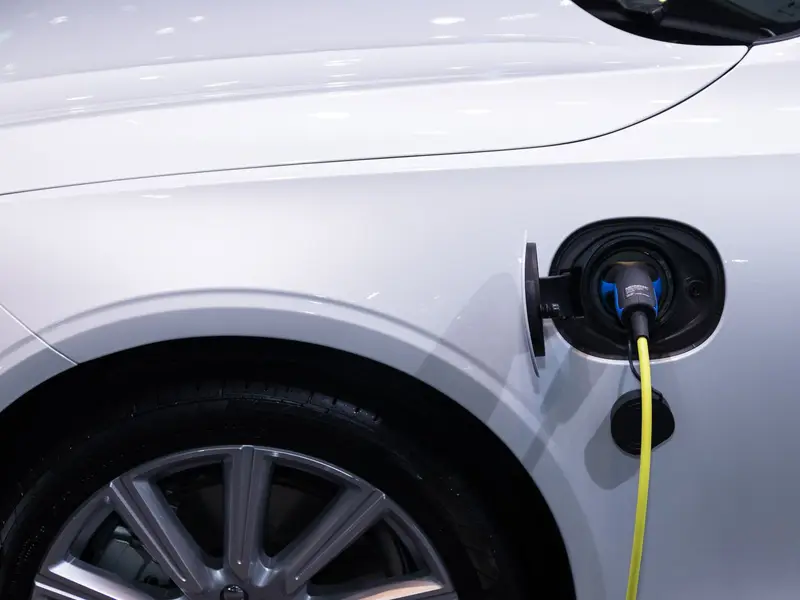
The portable cable that comes with many EVs is different. It is designed to run from a standard 10A power point at a reduced charge rate, which is why it is the one charging setup you can legally organise yourself.
The real risks of a DIY install
Legality aside, these are the practical reasons we would never recommend a DIY charger, even to a handy owner.
- Fire and shock. A charger draws high current for hours on end. Undersized cable or a loose termination can work for weeks and then overheat. EV charging also needs protection suited to DC fault currents (a Type B RCD, or a Type A device paired with 6mA DC fault detection in the charger, as the manufacturer specifies), which an ordinary safety switch may not provide. Our EV charger installation requirements guide explains the circuit.
- Insurance. If a fire or damage is traced back to unlicensed or non-compliant electrical work, your insurer may reduce or refuse the claim.
- Warranty. Charger manufacturers generally require installation by a licensed electrician for the hardware warranty to apply, and a DIY job comes with no workmanship warranty at all.
- Selling. A buyer's building inspector or a future electrician may flag non-compliant work, and you may need to fix it before a sale goes ahead.
What the CCEW is and why you want one
The Certificate of Compliance for Electrical Work (CCEW) is the NSW document that records what electrical work was done, where, by whom, and that it was tested. For a charger it covers the new circuit, the protection at the switchboard, the cable and the charger connection. Your electrician completes it after testing, gives you a copy and lodges it as the regulations require. Other states have their own equivalents.
Keep it with your house documents: it proves the charger was installed legally and to AS/NZS 3000, and insurers, buyers' inspectors and future electricians may ask for it. If an installer is vague about providing one, look elsewhere. EV Install issues a CCEW for every job.
What you can do yourself to save time and money
Most of the install time goes into licensed work: running cable, fitting protection and testing. But plenty of groundwork is legal for you to do, and it shortens the job and sharpens your quote.
Before you ask for a quote
- Check your car's specs. Find the onboard charger's maximum AC rate and the charge port type in the owner's manual. A BYD Atto 3, for example, accepts up to 7kW AC, so a bigger charger will not charge it any faster. Our guide to which EV charger you need helps you match the two.
- Choose the spot. Note which side the charge port is on and how you usually park, then pick a wall the cable will reach comfortably.
- Photograph the switchboard and meter box. One shot of the whole board with the door open (do not unscrew any covers), a close-up of the main switch, and a wide shot showing where the board sits relative to your parking spot.
- Measure the run. Pace out the rough distance from the switchboard to the charger location and note obstacles such as brick walls, a concrete driveway or a second storey.
- Sort out approvals early. Strata owners and renters need written consent first. Our guide on whether your home suits a charger covers what each home type needs.
Before install day
- Clear the wall, the parking spot and the area in front of the switchboard, and make the roof space access easy to reach.
- If you are buying a smart charger, stand at the charger spot with your phone and check the Wi-Fi signal.
- If the cable goes underground, ask whether you can dig the trench yourself. Only start once your electrician confirms the route and depth and you have checked for buried services.
For the full sequence from quote to commissioning, see how to get an EV charger installed at home.
Using the portable cable safely in the meantime
The portable cable supplied with many EVs (a Mode 2 cable, with a control box built into the lead) is legal to use in an existing 10A power point. At about 2.3kW it adds roughly 10 to 15km of range per hour, which covers short commutes if the car is plugged in every night. It is also the heaviest continuous load most household power points ever carry.
- Plug straight into the wall. No extension leads, power boards, double adaptors or cable reels.
- If the plug or socket feels hot, smells or looks discoloured, stop and have an electrician check it.
- Outdoors, use a weatherproof outlet and keep the control box off the ground where water can pool.
- Avoid sharing the circuit with heavy appliances, and if your car lets you reduce the charging current, use a lower setting on older wiring.
Getting a licensed install without the guesswork
The short version: plug in yourself, and leave everything behind the wall to a licensed electrician. EV Install has specialised in EV charger installation across Greater Sydney since 2017. Every job is done to AS/NZS 3000 and comes with a CCEW, a 12-month workmanship warranty and the manufacturer's hardware warranty. Where a switchboard or supply upgrade is needed, we coordinate it through our trusted, fully licensed Level 2 ASP partner electricians and manage the process, so you deal with one team.
See what a standard job includes on our home EV charger installation page, or compare app-controlled options on our smart EV charger installation page. When you are ready, book a free on-site quote and send through your switchboard photos to speed things up.
Related services
Written by Nathan Dawson, Founder & Lead EV Installer
A licensed electrician installing EV chargers across Sydney since 2017. Every install we quote is wired to AS/NZS 3000 and certified. More about Nathan.