Costs & Guides
How Much Does EV Charger Installation Cost in Sydney in 2026?
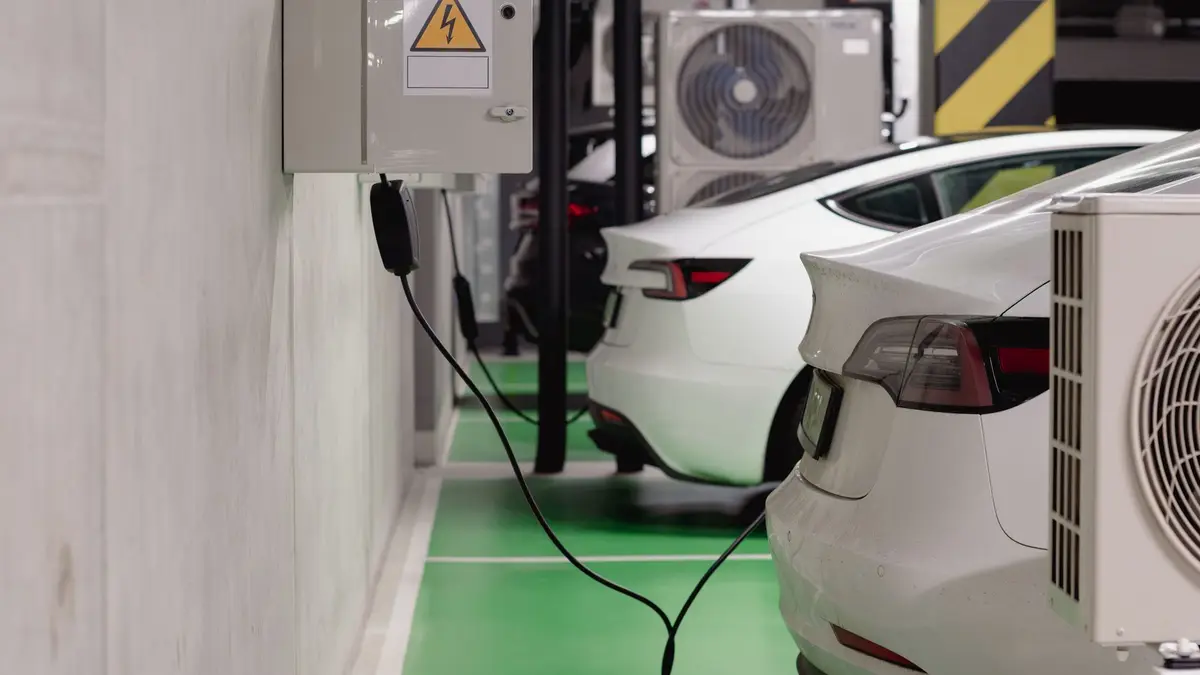
It is the first question almost every customer asks us, and it is a fair one. The honest answer is that EV charger installation in Sydney isn't a single fixed price — it is a few separate things added together, and the final figure depends mostly on what is already sitting in your garage and switchboard. A straightforward job and a tricky one can both be completely reasonable quotes; they are just describing different amounts of work. Below we break down exactly what you are paying for, what moves the number up or down, and how to read a quote so you know whether it is fair.
We install Level 2 chargers across Greater Sydney, every job to AS/NZS 3000 and backed by our 12-month workmanship warranty. The figures here are indicative ranges for mid-2026 — use them to sanity-check a quote, not as a fixed price for your specific site.
What Goes Into EV Charger Installation Cost
Every install is really two costs bundled together: the hardware (the charger itself) and the labour to mount it, wire it, protect it, and certify it. On a typical Sydney home job those two are roughly comparable in size, which is why supplying your own charger doesn't always halve the bill the way people expect.
A standard home Level 2 7.4kW charger supplied and installed commonly runs about $1,200–$2,200. If you buy the charger yourself and we only do labour, a short, tidy cable run is roughly $600–$1,100. The gap between those two is the hardware, plus the fact that a longer or concealed run takes more time and materials regardless of who supplies the unit.
The labour portion covers more than bolting a box to the wall. It includes:
- Running correctly sized cable from your switchboard to the charger location
- A dedicated circuit with the right circuit breaker and RCD protection
- Mounting, weatherproofing, and tidy cable management
- Testing, commissioning, and the AS/NZS 3000 compliance certificate
That compliance certificate matters. It is your proof the work was done legally and safely, and you want it in writing on every job. You can read more about what a home job actually involves on our home EV charger installation page, or see the full electrical requirements and how the circuit is wired in our EV charger installation requirements guide.
How Charger Choice Affects Price
The single charger spec that changes everything is power output, and that is tied directly to whether your home is single or three phase. Most Sydney houses are single phase, which caps a charger at 7.4kW — and for the vast majority of drivers that is plenty. Overnight, a 7.4kW unit easily adds a couple of hundred kilometres of range.
If your property has three-phase supply, you can step up to an 11kW or 22kW charger. These cost more for the hardware and usually more for installation, because three-phase cable is heavier and the circuit protection is larger. As a rough guide:
- 7.4kW single phase: the most common home install, and the cheapest path
- 11kW three phase: faster, sensible if you have three-phase supply and a larger battery
- 22kW three phase: the fastest home option, but most EVs can't accept the full 22kW on AC anyway, so check your car before paying for it
We talk people out of 22kW more often than into it. There is no point paying for charging speed your vehicle physically cannot use. Our EV charger types guide walks through the differences in plain language.
Smart Versus Basic Chargers
A basic charger turns on, charges, and turns off. A smart charger adds scheduling, app control, solar matching, and load management. On hardware alone, a smart unit typically adds roughly $150–$500 over a comparable basic model.
The installation labour is usually similar either way — the wiring is much the same. The premium is in the unit. Whether it is worth it depends on whether you have solar, a time-of-use tariff, or a tight switchboard, and we cover that decision in detail in our smart versus basic charger guide. For pure overnight charging on a flat tariff, a basic unit is genuinely fine.
When You Need a Switchboard Upgrade
This is the cost that catches people out, so we flag it early on every quote. A new charger is a significant, continuous load. If your switchboard is old, full, or doesn't have the spare capacity and modern safety protection to take a dedicated EV circuit, it may need work before the charger can go in.
To be clear about what we do and don't do: we do not perform switchboard upgrades in-house, and we are not a Level 2 ASP. Where the supply side or main switchboard genuinely needs upgrading, we coordinate that through our trusted Level 2 ASP partner electricians, who are licensed for that work. We project-manage it so you are not chasing two trades.
A switchboard upgrade, when required, is typically an extra ~$800–$2,500, quoted separately by the Level 2 ASP partner. Not every home needs one — many switchboards already have the headroom. We assess it on site and tell you plainly whether it is needed, rather than assuming.
Government Rebates and Incentives in NSW
This area changes regularly, so we will keep it general rather than quote a figure that might be out of date by the time you read it. Over recent years NSW has run various incentives connected to electric vehicles and home charging — some aimed at the vehicle, some at the charger, and some delivered through energy retailers or network providers rather than the government directly.
The key points to keep in mind:
- Eligibility, amounts, and which schemes are open change frequently — always confirm current details before you budget around them
- Some incentives are tied to specific approved charger models or accredited installers
- Energy retailers sometimes offer their own EV charging plans and credits separately from any government scheme
For the current, official position, check Energy NSW directly. We don't administer rebates ourselves, but we are happy to point you toward what is live at the time of your install. For more on how incentives work and what affects eligibility, see our EV charger rebates and grants in NSW guide.
What Makes Quotes Vary
Two homes on the same street can get noticeably different quotes, and there is usually a good reason. The biggest variables are:
- Cable run length: the distance from your switchboard to the charger. A garage right next to the board is cheap; a charger at the far end of the property, upstairs, or across a yard needs more cable and labour.
- Single vs three phase: three-phase installs cost more in cable and protection.
- Surface and mounting: brick, render, weatherboard, or running through a wall cavity all take different amounts of time, as does a neat outdoor weatherproof finish.
- Switchboard headroom: plenty of spare capacity means a quick connection; a full or ageing board may need the Level 2 ASP work above.
- Concealed vs surface cabling: hiding the run inside walls or under eaves looks better but costs more than surface conduit.
This is exactly why we prefer to look at the site, even with a few photos, before committing to a number. The variation between a Parramatta home with the board in the garage and a Mosman property with a long, concealed run can be hundreds of dollars — both perfectly fair.
What to Watch in Cheap Quotes
A low quote is not automatically a bad one, but some cheap quotes are cheap because something important has been left out. The things we would want a customer to question:
- Unlicensed work. EV charger installation is electrical work and must be done by a licensed electrician. No licence, no job — full stop.
- No AS/NZS compliance certificate. If a quote doesn't mention testing and a certificate of compliance, ask why. That document is your protection.
- Undersized cable. Cheaping out on cable size is dangerous on a continuous high-current load. Cable must be sized for the circuit, not for the quote.
- No load assessment. If nobody has looked at your switchboard or asked about your supply, they cannot know whether you need an upgrade — and that cost may land on you later.
- Vague switchboard wording. A quote that ignores the switchboard entirely may be hiding a follow-up cost.
A genuinely cheap install on a simple site is a real thing. A suspiciously cheap install that skips the certificate, the load check, or the right cable is a problem you inherit. We would rather quote honestly, including the awkward switchboard conversation, than win a job by leaving things out.
Getting an Accurate Quote
The most reliable way to get a real number is a quick assessment: where is your switchboard, where do you want the charger, how far apart are they, single or three phase, and which car. From there we can give you a firm price rather than a guess. Many jobs we can quote accurately from a handful of photos and a few answers; others we will want to see in person, especially long runs and older switchboards in suburbs like Penrith.
If you are weighing up an install anywhere in Greater Sydney, get in touch for a quote. We will give you an honest breakdown — hardware, labour, and whether the switchboard needs anything — with no pressure and no surprises on the day.
Related services
Related EV charging guides
Written by Nathan Dawson
Founder & Lead EV Installer. More about Nathan.