Short answer
Yes, if you want a time-of-use or EV electricity plan, because those tariffs price power by when you use it and a basic meter cannot record that. No, if you just want to charge: any EV charger works with any meter. Your retailer arranges a smart meter, so ask them about timing and any charge.
Key takeaways
- Any EV charger works with any meter. You only need a smart meter to access time-of-use and EV plans.
- A smart meter handles billing and a smart charger handles control. They are different devices, and many homes benefit from both.
- Your retailer arranges smart meters, so ask them about timing and whether any charge applies.
- Most home EV plans do not need a separate meter, but a wall charger always needs its own circuit.
- Compare plans using your real interval data, evening usage and solar exports before switching.
Smart meters come up the moment you start comparing EV electricity plans, and the jargon does not help. Your meter, your charger and your electricity plan are three separate things, each with a different job. Once you see how they fit together, it is easy to work out whether your meter is holding you back and what to do about it.
Smart meter vs smart charger
These two get mixed up constantly, partly because both are called smart and both can show you energy data.
- A smart meter is the electricity meter in your meter box. It is supplied by the metering provider your retailer appoints, records how much power your home uses in short intervals throughout the day, and sends that data remotely so you can be billed by time of use.
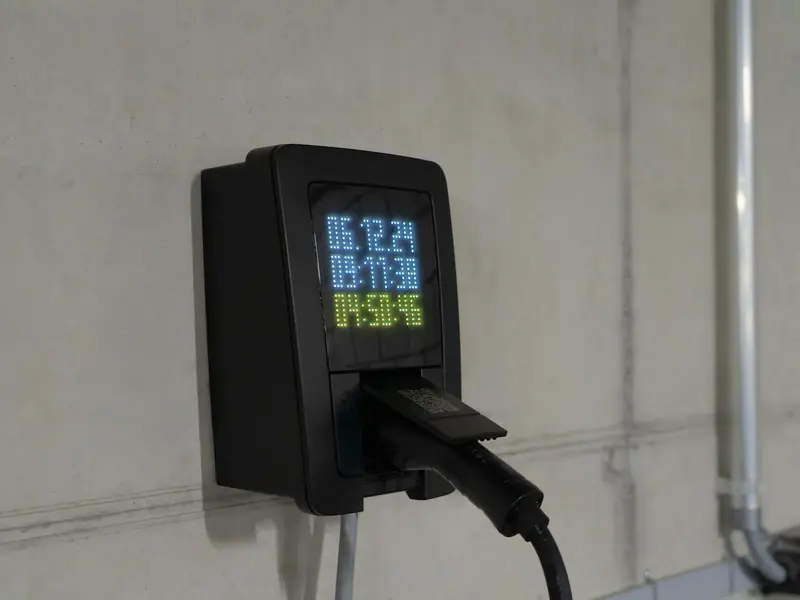
- A smart charger is the EV wall unit in your garage or carport. It has an app, can schedule charging, reports energy per session and, with a CT clamp, can manage load or follow your solar. You choose it and you own it.
You can have either without the other. A smart charger works perfectly well with an old basic meter, and a smart meter will happily record a basic charger. What the smart meter unlocks is pricing: access to time-of-use and EV plans. What the smart charger unlocks is control: making sure charging happens inside the cheap window (most cars can also do this themselves). For the hardware side, see our comparison of smart vs basic EV chargers.
How to check what meter you have
Most Australian homes have one of three meter types.
| Meter type | What it records | How it is read | Time-of-use and EV plans |
|---|---|---|---|
| Accumulation (basic) meter | Total usage only, as a running total | Manually, by a meter reader | Not possible |
| Interval meter (older, non-communicating) | Usage in time blocks | Manually, on site | Sometimes, so ask your retailer |
| Smart meter | Usage in short intervals, all day | Remotely, over a communications link | Yes, the usual requirement |
Look at the meter
Older accumulation meters often have a spinning disc, a row of number dials or a simple display that only shows a running total. Smart meters have a digital display that usually cycles through several readings and often carry the metering provider's name on the front. You only need to look through the meter box door, never open covers.
Check your bill and account
Your bill and online account are good clues. If your retailer's app shows usage graphs by the hour or half-hour, or your bill splits usage into peak, shoulder and off-peak, you most likely have a smart meter. A single usage figure does not settle it, because plenty of smart-metered homes are still on flat-rate plans.
Ask your retailer
If you are still unsure, ask your retailer. They can tell you your meter type, whether it supports the plan you are considering and how to download your usage data.
How to get a smart meter
Your electricity retailer arranges a smart meter, not your electrician. The usual process looks like this:
- Contact your retailer, ask for a smart meter and mention that you want to move to a time-of-use or EV plan.
- The retailer's metering provider books the installation and tells you about any planned power interruption.
- A technician swaps the meter, with the power off for a short time.
- Once the new meter is communicating, you can switch plans.
National rules have required new and replacement meters to be smart meters since December 2017, and the rules now aim for near-universal smart meter coverage by 2030. Many homes already have one or will be offered one. Whether there is a charge for an upgrade you request depends on your retailer and your circumstances, so ask before you book.
How EV plans and time-of-use windows work
Time-of-use pricing charges different rates depending on when you use power. The general pattern across Australian plans is:
- Peak: late afternoon into the evening, usually the most expensive time to use power.
- Off-peak: overnight, typically the cheapest.
- Shoulder: periods in between, priced in the middle.
- Solar soak or free periods: some newer plans add very cheap or free midday windows to soak up rooftop solar across the network.
EV plans are a variation on time-of-use, usually with a particularly cheap overnight window aimed at charging. The cheap rate generally applies to everything your home uses in that window, not just the car, so running the dishwasher or pool pump overnight benefits too. The exact windows, rates and conditions vary between plans and change over time, so read the plan details or ask your retailer rather than relying on a general rule.
The catch is the evening peak. Time-of-use plans often price peak usage higher than a flat-rate plan, so the savings depend on moving the car, and ideally other flexible loads, out of that period. For the practical side of hitting those windows automatically, see how to set up scheduled off-peak EV charging.
Do you need a separate meter or circuit for your EV?
These are two different questions with two different answers.
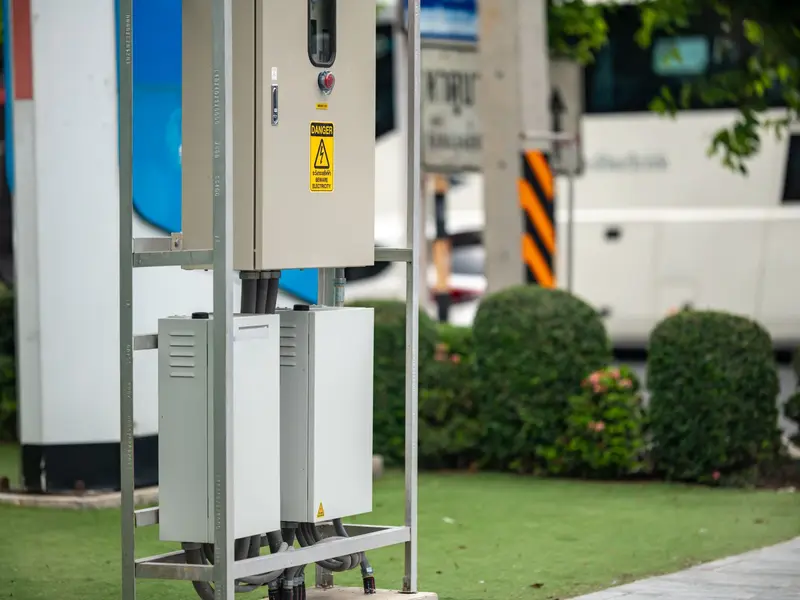
A separate circuit: yes, for a wall charger. A fixed EV charger needs its own dedicated circuit from the switchboard, protected by an RCBO with protection suited to DC fault currents. That is an electrical safety requirement, it is part of every home EV charger installation, and it has nothing to do with your tariff.
A separate meter: generally not. Most home EV plans measure your whole home through the one smart meter, so the car does not need its own meter. A separately metered EV circuit is uncommon for houses. If a particular plan or network arrangement requires one, your retailer will tell you, and any metering changes are Level 2 ASP work that we coordinate through our partner electricians.
Apartments are different. Shared car parks often need charger-level energy measurement or sub-metering so each owner pays for their own charging, which we cover in our apartment and strata EV charging service.
What to do before switching to an EV plan
An EV plan is not automatically cheaper. Before you switch:
- Get your interval data. Once you have a smart meter, your retailer can provide your usage by time of day. Compare plans using that real data rather than a guess.
- Add the car. Estimate the energy the car will need each week (most EVs use roughly 15 to 18kWh per 100km) and assume it lands in the cheap window.
- Check your evening usage. If you run air conditioning or cook heavily during the evening peak, higher peak rates can eat into the savings.
- Weigh your solar exports. Plans differ in what they pay for exported solar, which matters if you export a lot during the day.
- Read the fine print. Check the exact window times, whether they differ on weekends, any exit fees and how long the rates are fixed.
The Australian Government's Energy Made Easy website lets you compare plans using your own usage, and Energy NSW has general information for EV owners.
Getting your home ready for cheaper charging
The order that works best is simple: confirm or request a smart meter, compare plans using your real usage, then make sure your charger and car charge inside the cheap window. Most homes can do all of this on their existing single-phase supply. If you are wondering whether you need more capacity, our guide on whether you need 3 phase power for an EV charger covers it.
EV Install installs and commissions chargers across Greater Sydney, including app setup and tariff schedules as part of a smart EV charger installation. Book a free on-site quote and we will check your switchboard, recommend a charger and set it up to suit your plan.
Related services
Written by Nathan Dawson, Founder & Lead EV Installer
A licensed electrician installing EV chargers across Sydney since 2017. Every install we quote is wired to AS/NZS 3000 and certified. More about Nathan.