Smart Charging
Smart EV Chargers vs Basic: Is the Upgrade Worth It for Sydney Homeowners?
"Smart" gets thrown around a lot in EV charging, and not always honestly. So let's be straight about it. A smart charger is genuinely useful for some Sydney households and a waste of money for others. The right answer depends entirely on your tariff, whether you have solar, and what your switchboard can handle. Below we walk through what these features actually do in day-to-day use, what the upgrade costs, and who really benefits — so you can spend on what helps and skip what doesn't.
We install both smart and basic chargers across Greater Sydney, every job to AS/NZS 3000 and covered by our 12-month workmanship warranty. We have no stake in talking you into the dearer unit — we install what suits your home.
What a Smart EV Charger Actually Does
A basic charger does one thing: it delivers power to your car whenever the car asks for it. Plug in, it charges. That is the whole story, and for a lot of people it is all they need.
A smart charger adds a brain and a connection. It can be told when to charge, how fast to charge, and how much power to draw based on what else is happening in the house. It talks to an app, and often to your solar system or switchboard, so it can make decisions instead of just running flat out. The features that matter in practice are scheduling, solar matching, load management, and remote monitoring — and we'll take each in turn.
Scheduling for Off Peak Tariffs
This is the feature that pays for itself fastest, and it only matters if you are on a time-of-use or dedicated EV tariff. Many Sydney households are. On those plans, electricity is much cheaper overnight or in certain off-peak windows than during the evening peak.
A smart charger lets you set it and forget it: plug in when you get home at 6pm, but tell the charger not to actually start until the off-peak window opens. You wake up to a full battery charged at the cheap rate. Over a year of daily charging, that price difference adds up to real money.
A basic charger can sometimes achieve the same thing if your car has a built-in scheduling feature, or via a separate off-peak controlled circuit. But the charger-side schedule is more flexible and doesn't depend on you remembering to set it in the car each time. If you are on a flat-rate tariff, though, scheduling does nothing for you — there is no cheap window to aim at.
Solar Matching
For homes with rooftop solar, this is often the feature that justifies the whole upgrade. Solar matching uses a CT clamp (a small sensor fitted at your switchboard) to measure how much excess solar you are exporting to the grid at any moment. The charger then ramps its draw up and down to soak up that surplus instead of selling it back cheaply.
In practice it means your car charges mostly or entirely from your own panels during the day, rather than from grid power you pay full price for. Given how low feed-in tariffs have become, using your own solar to charge is almost always worth far more than exporting it. Most smart chargers offer a mode where they charge only from surplus solar, or a blended mode that tops up from the grid to a minimum rate.
This only works if you have solar and you are home (or your car is) during sunlight hours. If you are out all day with the car, the benefit shrinks. We cover the setup in more detail on our solar EV charger integration page, including where the CT clamp goes and what your inverter needs to support.
Load Management and Dynamic Balancing
This is the feature that is less about saving money and more about making an install possible at all. A smart charger with dynamic load management watches the total current your home is drawing and throttles the charger back when the rest of the house is busy — the oven, the air-con, the kettle all going at once.
That matters because it stops the charger tripping your main switch, and in some cases it means you can install a charger on a switchboard that wouldn't otherwise have the spare capacity for a full-speed dedicated circuit. Instead of upgrading the supply, the charger simply uses whatever headroom is available at any given moment and speeds up again when the house quietens down.
For homes with two EVs, dynamic balancing can also share capacity between two chargers so they don't both pull maximum current at the same time. Where a switchboard genuinely can't cope even with load management, an upgrade may be needed — and to be clear, we don't do switchboard upgrades in-house and we are not a Level 2 ASP. When that work is required, we coordinate it through our trusted Level 2 ASP partner electricians and manage it for you.
Remote Monitoring and App Control
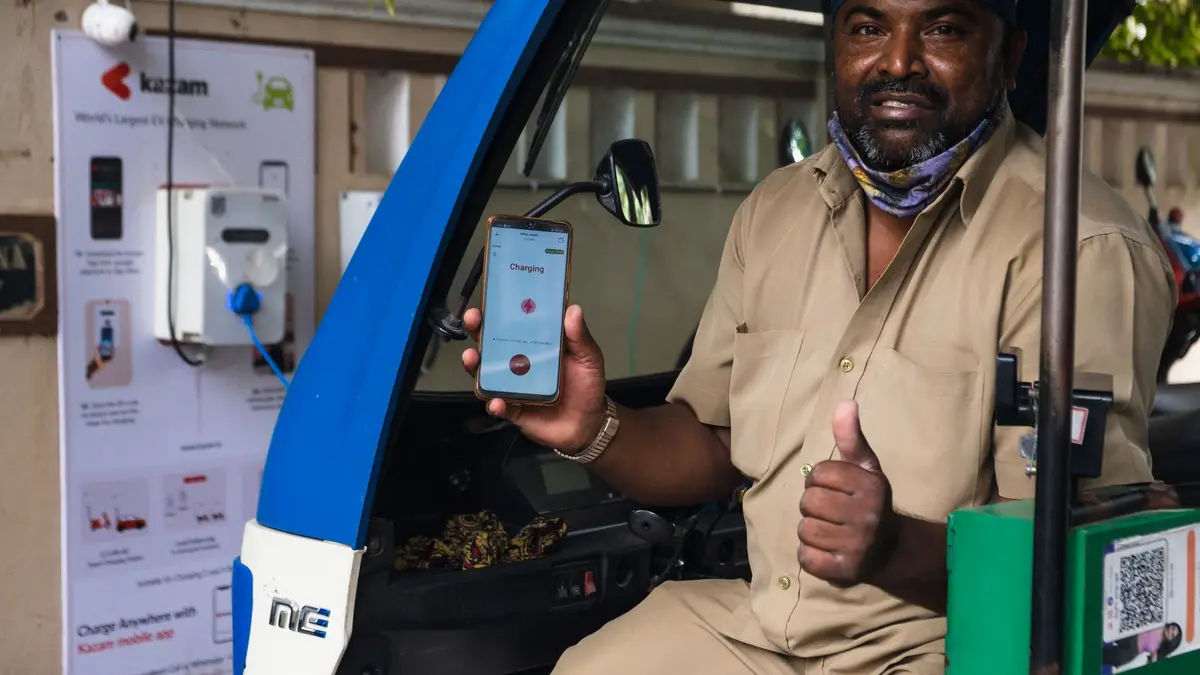
Every smart charger pairs with an app, and the quality of that app varies a lot between brands. At its best, the app lets you start and stop charging, set schedules, see how much energy each session used, track costs, and get notified when charging finishes or if something goes wrong.
The popular units we install and the apps behind them:
- Tesla Wall Connector — controlled through the Tesla app; clean and reliable, and a strong choice well beyond just Tesla owners
- Wallbox Pulsar Plus — paired with the myWallbox app, with good scheduling and solar features
- JuiceBox — app-based scheduling and energy tracking
- Ocular IQ — a popular locally supported smart unit with app control
Monitoring is genuinely handy if you want to track running costs, manage charging while you are out, or keep an eye on a charger the kids or tenants use. If you would never open the app, it is a feature you are paying for and not using. Our EV charger types guide compares the common models side by side.
The Cost Difference
Here is the part people actually want. On hardware, a smart charger typically adds roughly $150–$500 over a comparable basic model. The installation labour is usually much the same either way, because the wiring and mounting are nearly identical — the difference is in the unit itself, not the work.
So the real question isn't "is smart better" — it usually is, on paper. The question is whether the features will save or earn you back that premium. If you have solar or a time-of-use tariff, the answer is almost always yes within a year or two. If you are on a flat tariff with no solar, you may never recoup it.
Which Households Benefit Most
Some homes get clear, measurable value from a smart charger. You are in the sweet spot if you have:
- Rooftop solar — solar matching alone can justify the upgrade by charging from your own panels
- A time-of-use or EV tariff — scheduling to the off-peak window saves money every single night
- Multiple EVs — dynamic balancing lets two cars share capacity safely
- A tight or older switchboard — load management can avoid or delay a costly supply upgrade
If two or three of those apply to you, we would lean smart without hesitation. A Castle Hill home with solar and two EVs is exactly the kind of setup where the features earn their keep.
When a Basic Charger Is Perfectly Fine
We will happily fit a basic charger, because for plenty of households it is the sensible choice. A basic unit is perfectly fine if you:
- Are on a flat-rate tariff with no off-peak window to chase
- Have no solar, so there is no surplus to match against
- Just want to plug in overnight and wake up to a full battery
- Have a switchboard with comfortable spare capacity, so load management isn't needed
In that situation a smart charger's headline features sit idle, and you have paid extra for an app you'll rarely open. A well-installed basic charger from a quality brand will charge your car safely and reliably for years. There is no shame in the simple option when the simple option is the right one — a Newtown terrace on a flat tariff often doesn't need anything cleverer.
If you are not sure which camp you fall into, that is exactly the conversation we are happy to have. Tell us your tariff, whether you have solar, and what you drive, and we will recommend the unit that suits — not the dearest one on the shelf. To talk it through or get a quote anywhere in Greater Sydney, get in touch.
Related services
Related EV charging guides
Written by Nathan Dawson
Founder & Lead EV Installer. More about Nathan.