Short answer
No. Electric car charging points differ in connector (Type 2, CCS2, CHAdeMO or Type 1), AC or DC power, speed, whether a cable is attached, and how you access and pay. Most cars sold new in Australia use Type 2 for AC and CCS2 for DC, so they work with most chargers here.
Key takeaways
- Most new EVs in Australia, including Teslas, use Type 2 for AC charging and CCS2 for DC fast charging.
- Many public AC posts are untethered, so carry your own Type 2 cable.
- You charge at the lowest of the charger, cable, car and battery limits, not the number on the sign.
- Public networks use different apps and accounts; some Tesla Superchargers are open to other EVs.
- Avoid unapproved adapters, and never use third-party plug adapters or extension leads with a portable charging cable.
Pull into a petrol station and you know every bowser will fit your car. EV charging is not quite that simple yet, but it is far simpler in Australia than many overseas articles suggest. Most cars sold new here share the same two connectors, so the real differences between charging points come down to AC or DC power, speed, whether a cable is attached, and how you get access and pay. This guide explains each difference, shows which connectors work with which cars, and covers why the number on the sign is not always the speed you get.
AC and DC charging points
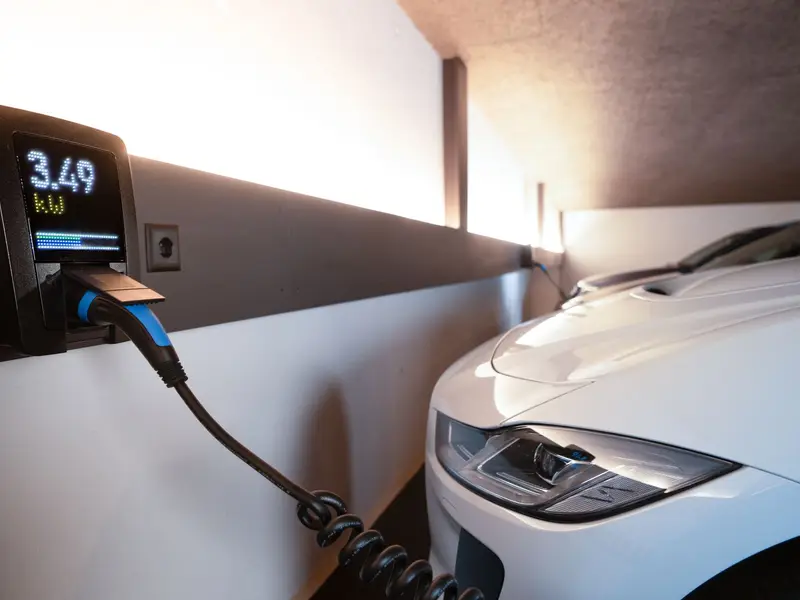
The biggest split is between AC and DC. An AC charging point (a home wallbox, a workplace charger or a post in a shopping centre car park) supplies AC power, and your car's onboard charger converts it to DC for the battery. That onboard charger sets the speed limit, which is usually 7kW or 11kW on popular EVs.
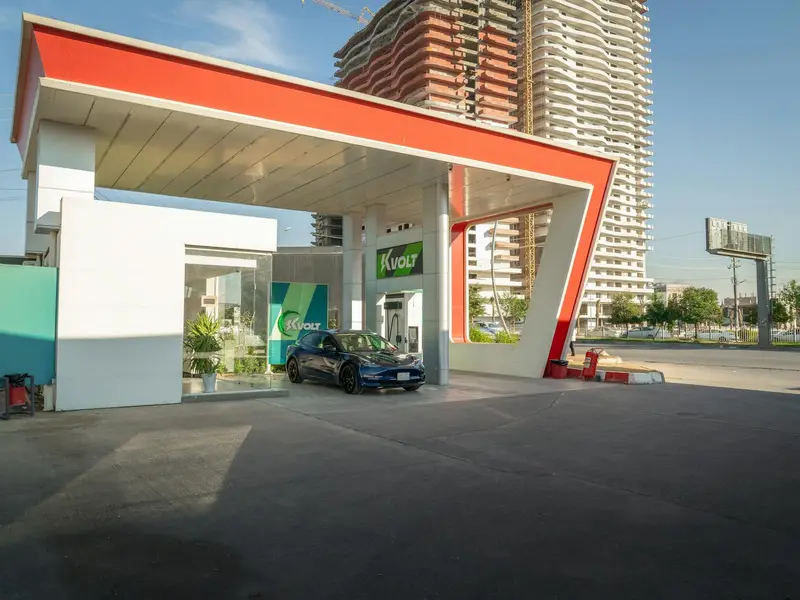
A DC charging point has the converter inside the station and feeds the battery directly, so it can deliver 50kW up to 350kW. Most EVs have one charging inlet that handles both: the CCS2 inlet is a Type 2 socket on top with two large DC pins underneath. Many plug-in hybrids, however, have no DC inlet at all and can only use AC points.
If you are still getting your head around the categories, our guide to how many types of EV chargers there are lays out the three main types and their speeds.
Connector compatibility in Australia
Here are the four connectors you might see in Australia and which cars use them.
| Connector | AC or DC | Used by | What to know |
|---|---|---|---|
| Type 2 (Mennekes) | AC | Almost all new EVs and plug-in hybrids sold in Australia, including Teslas | The standard for home wallboxes and public AC posts |
| CCS2 (Combo 2) | DC | Most new EVs sold in Australia, including Teslas | The standard for DC fast charging; the car inlet also accepts a Type 2 AC plug |
| CHAdeMO | DC | Earlier Nissan Leaf models and the Mitsubishi Outlander PHEV | A legacy standard; not every DC site offers it, so check the network app first |
| Type 1 (J1772) | AC | Some older or imported vehicles | Use an untethered Type 2 point with a Type 2 to Type 1 cable |
Overseas content often talks about plug standards that are not used on cars sold new in Australia, so if a US article tells you a charger will not fit, check against this table instead.
Will any charger work with my car?
For most drivers the answer is yes, with a few checks. Run through these before you rely on a charger:
- Does the plug match? A Type 2 car works with any Type 2 AC point. For DC, you need a CCS2 inlet (or CHAdeMO on cars that use it).
- Does your car take DC at all? If you drive a plug-in hybrid, check whether it has a DC inlet before planning a trip around fast chargers.
- Is there a cable? Many public AC posts are untethered, so you need your own Type 2 cable.
- Can you access it? Some chargers are private, member-only, or limited to staff, residents or fleet vehicles.
- How do you pay? Each network has its own app, account or card, and some newer sites take contactless payment.
At home, compatibility is rarely an issue. A Tesla Wall Connector, for example, works with any EV that uses a Type 2 connector, not only Teslas. When you are choosing a home unit, which EV charger you need covers the decisions that actually matter.
Tethered and untethered charging points
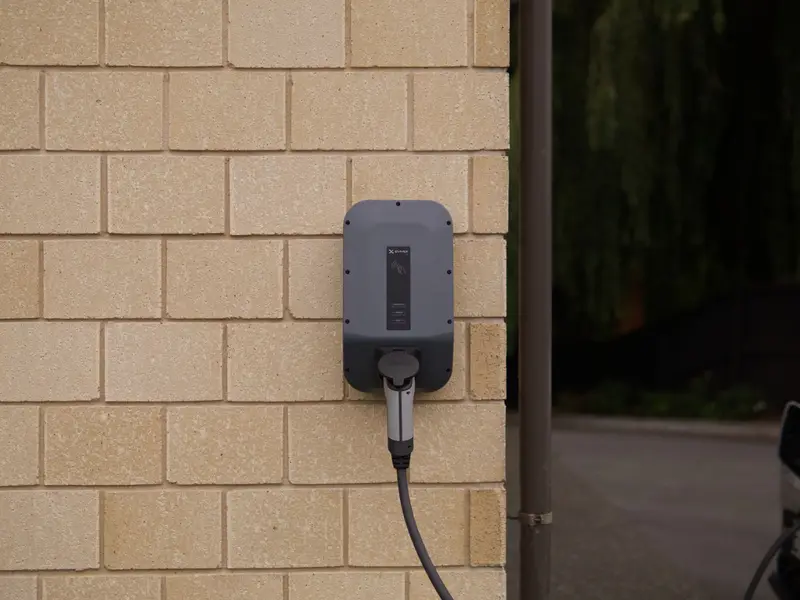
A tethered charging point has its cable permanently attached. You park, plug in and go. DC fast chargers are always tethered, and many home wallboxes are too.
An untethered point has only a Type 2 socket, and you supply the cable. Many public AC posts work this way, as do some home units chosen for shared driveways or mixed vehicles. The cable itself matters: it carries a rating that tells the charger how much current it can safely handle. A cable rated for 32A and three-phase works at full speed on any AC point, while a lighter 16A single-phase cable will cap your charging speed.
Public networks and how you pay
Public charging in Australia is spread across several networks, and they do not all work the same way. Large DC networks such as Chargefox, Evie and NRMA each run their own app and account. Tesla Superchargers were built for Teslas, but a growing number of Australian sites are open to other CCS2 EVs through the Tesla app, and pricing for non-Tesla drivers can differ.
On top of the big networks you will find council, shopping centre, hotel and workplace chargers, often AC and sometimes free or limited to customers. Pricing models vary between networks and change over time: some charge per kWh, some add idle fees if you stay plugged in after charging finishes. Check the app before you plug in. The NRMA's electric vehicle hub is a good starting point for planning longer trips around NSW.
For a business thinking about offering charging, the choice of hardware and payment platform shapes who can use it. Our car park EV charging stations page covers access control and billing for shared sites.
Why your car may charge slower than the sign says
The rating on a charging point is the most it can deliver, not what your car will get. You charge at the lowest of several limits:
- Your onboard charger. A car that accepts 7kW AC charges at about 7kW on a 22kW post.
- Phases. A car whose onboard charger uses a single phase gets only one phase of a three-phase post. On an 11kW post (16A per phase) that can mean roughly 3.7kW.
- Your car's DC limit. A car with a modest maximum DC rate will not go faster on a 350kW unit.
- Battery level. DC charging slows as the battery fills, most sharply above about 80 percent.
- Battery temperature. A cold or very hot battery charges more slowly; many cars warm the battery when you navigate to a fast charger.
- Shared power. Some sites split power between cars on the same unit, and car parks with load management share capacity across bays.
- Your cable. On untethered posts, a lower-rated cable caps the current.
Adapters and what to avoid
Adapters are where compatibility shortcuts become safety problems. A few rules:
- A Type 2 to Type 1 cable is fine for older Type 1 cars on untethered AC points, as long as it is a properly rated product.
- Be very cautious with DC adapters. Only use one your car maker or the charging network explicitly approves.
- Never adapt a portable charger's plug to fit a different socket, such as forcing a 15A plug into a 10A outlet. Get the correct outlet installed instead.
- Never use extension leads or power boards with a portable charging cable.
- Avoid cheap, unbranded gear without Australian supply and support.
What this means for your home charger
The good news is that a Type 2 home charger suits nearly any EV you are likely to buy, now or next. Choose tethered for convenience or untethered for flexibility, size it to your car and your supply, and keep a Type 2 cable in the boot for public AC posts. Our EV charger types explained page compares the options side by side, and what an EV charger is covers the basics of how the hardware works.
EV Install is brand-independent and installs home wallboxes, shared car park systems and DC fast chargers across Greater Sydney. Book a free on-site quote through our home EV charger installation page, or contact us about a business site, and we will give you a fixed written quote.
Related services
Written by Nathan Dawson, Founder & Lead EV Installer
A licensed electrician installing EV chargers across Sydney since 2017. Every install we quote is wired to AS/NZS 3000 and certified. More about Nathan.